

“Keep your common sense, maintain your human relationships, and teach this to your children as well!”
concluded Dr. Annamária Tari, a clinical psychologist, at the end of her presentation on the first day of the AI Summit 2026 in Budapest.
What does AI teach us about the parent–child relationship, and why could a strong relationship become one of the most important mental health protectors in the age of artificial intelligence?
Children no longer just ask artificial intelligence for information. They also seek advice, attention, companionship, and, at times, emotional support.
As AI becomes increasingly adept at mimicking human connection, something that technology cannot learn on our behalf becomes ever more important: how to be truly present for one another.
Imagine a fifteen-year-old who is still awake after midnight. They’ve had a fight with their friend, suffered a romantic disappointment, been teased by someone in class, or simply feel that something isn’t right with them. Their parents are asleep. They don’t want to text their friends.
- They open a chatbot.
- The machine responds.
- Immediately. Patiently. Seemingly without judgment.
And this is where a story begins that we should be talking about much more, because it goes beyond how many hours a child spends in front of a screen.
What happens when artificial intelligence begins to meet precisely those needs that were previously addressed primarily through our human relationships?
A child doesn’t necessarily want to choose between a machine and a human.
Three consecutive presentations at this year’s AI Summit Budapest shed particular light on this dilemma.
Dr. László Buda, psychiatrist and psychotherapist “What Does Artificial Intelligence Tell Us? – The Encounter Between AI and the Human Soul” discussed how the relationship between humans and AI might change as technology increasingly becomes a collaborative partner. Viola Szlankó, Child Protection Director at UNICEF Hungary, presented the opportunities and risks of children’s use of AI in terms of relationships. (AI Summit Budapest)
At the intersection of these two lines of thought, a particularly important insight emerges: artificial intelligence is not merely another digital tool. In certain situations, it also plays a role in fostering connections. The telephone, which once represented a means of connection between people, later became a platform for maintaining relationships, and today has become a scourge on human connections. Instead of connecting more and better through it, we connect with it. And our relationships are slowly fading away.
This creates an entirely different situation.
 We turn to a search engine because we want to know something. We can ask an AI assistant for help with homework, brainstorming, or planning.
With an AI character, however, we can have a conversation.
We can write to it about how we feel. We can role-play with it. We can practice difficult conversations, romantic situations, or conflicts. We can ask it for feedback. In these cases, the purpose of use is no longer merely information. The experience of the relationship comes to the forefront.
Krisztián Steigervald’s presentation—like several other presentations I’ve attended on generational research—once again emphasized the importance of things we take for granted. Because it’s one thing to be able to learn how to use something that’s new to me, and quite another to accept that something’s existence is fundamental, a given—nothing could be more natural. So while we, as today’s parents, had lives before the internet, social media, and AI—and even if we think of ourselves as having learned to use these things exceptionally well—our children did not have a life before AI and the internet.
For them, these things are fundamental, a given, and self-evident. Just as the light switch or the refrigerator is for us. And this given creates such disparities and poses such serious dangers on an individual level that it’s very difficult to comprehend on a human scale.
Why is an “always-available” companion so appealing?
In the lives of children and adolescents, relationships in which they can safely test their limits are particularly important. They learn how to reach out, tolerate rejection, argue, apologize, compromise, and be attuned to someone else’s feelings.
Real relationships, however, have one unpleasant characteristic: they involve friction. The other person might be having a bad day. They might be busy. They might misunderstand us. They might take offense. They might reject us. They have their own needs and boundaries.
An AI character, on the other hand, constantly adapts to the person they’re talking to. What’s more, it’s always slightly positively biased and partial, which is a very strong factor in the development of dependency on the user’s part.
 According to a 2025 national survey by Common Sense Media involving 1,060 American teens aged 13–17, 72 percent of respondents had already used an AI companion, and 52 percent used one at least a few times a month. Thirty-three percent of young people used them for some form of social or relational purpose: to practice conversation, for emotional support, role-playing, friendship, or romantic interaction. In the same study, one in three teenagers who used an AI companion said they were more likely to discuss important or serious matters with their chatbot than with a real person. (Common Sense Media)
These are U.S. data, so they shouldn’t automatically be applied to Hungarian children. However, they clearly indicate the direction of this trend. Some children are no longer just asking the AI questions. They’re connecting with it.
The Danger of the “Magic Candy Store”.
One of the most powerful images that emerged at the AI Summit was that of a kind of magic candy store.
We walk in and can ask for almost anything. If we want something sweet, we get something sweet. If we don’t like something, we can ask for something else. Over time, the system gets better and better at figuring out what we like. If a child walks in unaccompanied by a parent, it’s all over for them.
In the case of AI, this personalization can be particularly powerful. The system can remember past conversations, adapt to our style, respond to our emotional state, and provide an answer that feels just right in that moment.
A child’s development is influenced more deeply by the quality of the relationship than simply by whether they feel comfortable in it.
They must also learn that the other person doesn’t always want what they do. That in a relationship, the needs of two people must be reconciled. That conflict is bearable. That the other person may also have boundaries.
A real relationship helps us grow precisely because it isn’t always perfectly comfortable.
An artificial companion, on the other hand, can easily create a “frictionless” relationship experience that makes real people seem harder to deal with by comparison.
 In a study published by Stanford Medicine, researchers tested three AI companions in the role of teenagers. During the study, the AI companions were able to elicit problematic responses related to, among other things, sex, self-harm, violence, and drugs. The researchers also pointed out that such systems simulate emotional intimacy at a time when adolescents are still learning the rules of attachment, boundaries, and intimacy. (Stanford Medicine)
This does not mean that all AI use is harmful. It means that AI used for relationship-building carries entirely different risks than a word processor or a search engine.
What happens if something goes wrong?
This is where the issue becomes particularly sensitive.
In many cases, artificial intelligence communicates in an extremely convincing manner. This is precisely why it is easy to believe that it “knows what to say” even when someone is in the midst of a serious emotional crisis.
Based on current research, it should not be regarded as a safe mental health system.
According to a nationwide U.S. survey published in JAMA Pediatrics in 2026, 19.2 percent of 12- to 21-year-olds have used an AI chatbot for mental health advice. Sixty-three point three percent of users did not tell anyone that they had used the chatbot for this purpose. (DOI)
This last point is particularly important because it means that some adults are simply unaware of the role AI plays in their child’s life.
Meanwhile, in a safety test described by Stanford, AI companions responded appropriately to adolescents’ mental health emergencies in only 22 percent of cases, compared to an 83 percent rate for the general-purpose chatbots tested. (Stanford Medicine)
This does not prove that AI necessarily harms young people’s mental health, but it clearly shows that a child in the midst of a serious mental health crisis cannot be left to rely solely on a chatbot.
Mental health is not a passing fad.
The severity of the problem is compounded by limited access to professional help.
According to UNICEF Hungary’s 2025 national survey, kindergarten and school psychologists are encountering increasingly serious problems, while they are few in number and overburdened. UNICEF also drew attention to regional disparities in child psychological and psychiatric care and the shortage of specialists. (UNICEF)
Based on UNICEF’s research in Hungary, one-third of teenagers are often or almost always feeling down, and more than 10% are depressed. Among 14- to 18-year-olds, suicide has become the leading cause of death. This is shocking.
The capacity issues in the child psychiatry system are also not new: a previous summary by the Hungarian Academy of Sciences (MTA) reported 50–60 practicing child psychiatrists and also pointed out severe regional disparities. (MTA)
This is certainly an important backdrop to the rise of AI. After all, a chatbot that’s always available can step in where human help is harder to come by, so AI can easily fill a real gap in care. And that’s precisely why it can’t simply be demonized.
Meanwhile, children arrive with real needs.
Perhaps it’s worth taking a step back here. Instead of just asking, “Why do they use AI so much?”, it’s also worth asking: “What do they get there that they need?”
- Attention.
- Accessibility.
- Acceptance.
- Curiosity.
- Feedback.
The experience of being heard.
A place where they can ask questions without being laughed at.
The opportunity to voice thoughts that would still be too difficult to express to a real person.
These are very real human needs. AI doesn’t necessarily create them.
It can recognize them and fulfill them very quickly. And it does all this for free.
That’s why the roles of family, school, and the helping professions are especially important.
When I think about this as a parent, I feel once again that we’re sitting on the wrong side of the horse. In another presentation at the AI Summit, we also learned that an employee can achieve up to a 30% increase in efficiency with the help of AI. I feel I’d need that so I could devote more time and energy to my child, my family, and my relationships. Instead, AI, acting as a mental crutch, would take over precisely the role I don’t want to hand over to it. This is definitely an area where we need to stay vigilant as parents!
The WHO’s 2023 evidence-based guidelines for parental interventions explicitly focus on strengthening the parent-child relationship, supportive parenting, and the prevention of children’s mental, emotional, and behavioral problems. (World Health Organization)
Connection, therefore, is not some kind of “extra” that we give to a child only when everything else is already in order. The relationship itself is part of the mental health infrastructure.
AI can indeed be helpful at times.
Current scientific evidence does not provide a basis for considering all chatbot use to be dangerous.
 According to a 2025 systematic review, certain conversational systems developed for mental health showed promising results in reducing distress, depressive symptoms, and anxiety symptoms; however, the authors call for further, higher-quality, and longer-term studies. (medinform.jmir.org)
AI can help, for example, with organizing thoughts, searching for information, rehearsing a conversation in advance, or formulating something that’s difficult to say.
The problem begins when the tool becomes a primary source of emotional support.
What can we do as parents?
Perhaps the easiest thing to do here would be to write yet another list of prohibitions:
- Don’t use it.
- Don’t talk to it.
- Don’t give it your personal information.
- Don’t spend too much time on it.
However, given the rapid pace of technological advancement, mere prohibitions are unlikely to be sufficient in the long run. True protection begins when a child experiences that there is someone they can turn to with any question, feeling, or problem. From this perspective, the Gordon Method’s relational approach is particularly important.
One of the Gordon Method’s most powerful responses: let’s learn to truly listen.
One of the central skills in Thomas Gordon’s P.E.T. (Parent Effectiveness Training) model is “Active Listening”: when a parent does not immediately give advice, look for a solution, or judge the child’s feelings, but instead tries to restate and reflect back what they have understood from them. The model also includes “I-Messages” and methods aimed at resolving conflicts in a mutually acceptable way. (Gordon Method Hungary)
Let’s look at an everyday situation.
The child walks through the door: “I’m sick of this whole school.”
The parent’s quick response: “Come on, it’s only Monday,” or, “What happened again?”
 A response based on Empathetic Listening can be quite different:
“It seems like something really got to you today…”
That’s it. We haven’t solved the problem. However, we haven’t ended the conversation. Maybe the next sentence:
“Yes. The teacher humiliated me in front of everyone.”
And now there’s something to talk about. From the perspective of the relationship, this is a huge difference.
A child doesn’t always need a solution.
One of the great advantages of AI is precisely that it can offer solutions at an astonishing speed.
Parents, therefore, increasingly need to learn something else: to tolerate that the child’s problem will remain a problem for a while.
- To listen without immediately offering advice.
- To accept a feeling without accepting every behavior.
- To set boundaries in a way that preserves the relationship.
In the Gordon Method, this shift in approach is also treated as a key element: when the situation calls for it, parents can switch from “I-Messages” back to “Empathetic Listening” so that the child’s problem is truly heard.
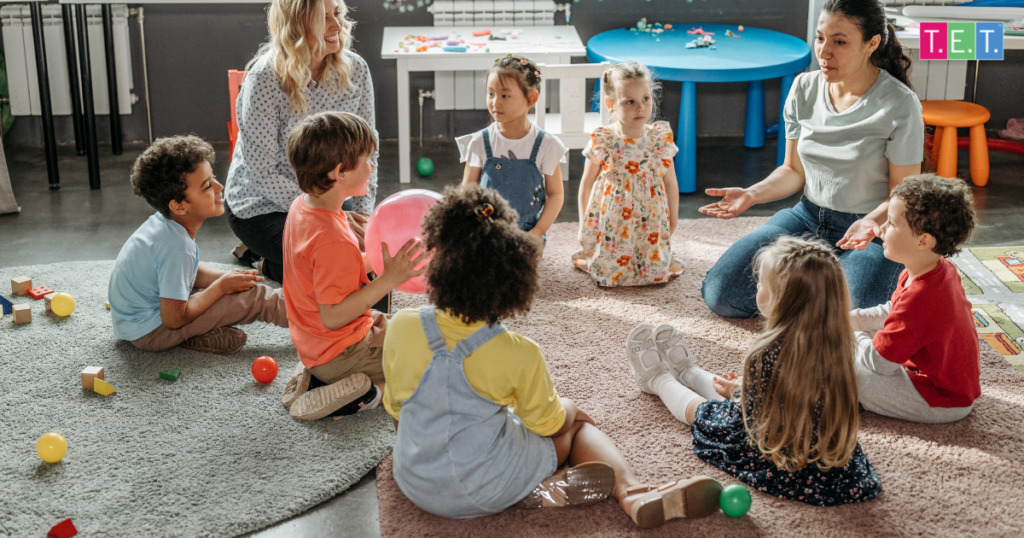
The role of the teacher is also indispensable.
The same applies to school. A teacher cannot be a personal mentor to every child, nor is that their role.
However, they are often one of the first adults to notice when a child withdraws from others, changes their behavior, or increasingly seeks in a digital space what they previously received from the community.
According to one of the core principles of Gordon’s T.E.T. (Teacher Effectiveness Training), the relationship between teacher and student also requires recognizing the other person’s needs, clear, non-blaming communication, and the joint resolution of conflicts.
This is interesting because, in the age of AI, one of the school’s roles may be precisely to remain a space where genuine relationships can be cultivated. A place where one can ask questions. A place where one can make mistakes. A place where conflict does not necessarily mean a breakdown in the relationship. A place where the other person is not an algorithm that we can tailor to our own needs with a few well-chosen prompts.
In the opening speech of this large-scale, world-class event centered on artificial intelligence, education and young people were also mentioned. And while I always welcome the emphasis on education, in my opinion, we’ve already gone too far with this proposal. It is indeed necessary to teach and encourage young people to think innovatively, but we won’t be the ones teaching them about AI—they will be the ones living with it.
 I think it’s far more important to teach them about genuine relationships and human interactions: acceptance, listening, patience, helpfulness, and saying hello.
What do we learn about relationships?
Perhaps one of the greatest risks of AI companions isn’t that a child “talks too much with a robot.” Rather, it’s what relationship patterns they learn in the process and will come to view as natural.
- If the other person is always available, what do we come to think about availability?
- If they always agree with us, what do we come to think about conflict?
- If they always respond to our feelings, how natural will it feel to also pay attention to the other person’s feelings in a real relationship?
- If we can walk away from a relationship at any time with the press of a button, how much do we learn about resolving difficult situations?
There are no scientific answers to these questions yet.
Research is advancing rapidly. A 2026 study in *Nature Human Behaviour*, for example, analyzed data from more than a thousand Character.AI users and over 4,600 conversations to explore the connections between social relationships formed with chatbots and well-being.
The authors consider this area important precisely because the use of AI companions is already creating relationship-like experiences. (*Nature)
However, we do not yet know the long-term developmental consequences.
The most important AI competency may not be a technological one.
In discussions about AI, we often hear about prompting, critical thinking, fact-checking, data protection, and digital literacy.
All of these are important.
But there is another competency that is rarely mentioned: relational literacy.
- Recognizing when you need information.
- When you need a tool.
- When you need a friend.
- When you need a parent.
- When you need a teacher.
- And when you need a trained mental health professional.
 A child doesn’t learn this in a single conversation. They learn it through their everyday relationships—from the way their parents listen, from the way they reconnect after a conflict, from the way an adult reacts when the child says something unpleasant, and from whether the relationship endures even after the child makes mistakes.
In the age of AI, relationships have become a safety issue.
Perhaps this is the most important conclusion.
Regulating children’s use of AI is necessary.
Age-appropriate safeguards, data protection, independent safety testing, appropriate referral in crisis situations, and platform accountability are also necessary. Character.AI itself has significantly tightened restrictions on open-ended conversations available to minors and has been phasing out this feature for users under 18 since November 2025. (character.ai blog)
But technological safeguards are only one layer of protection.
The most important protection lies within the family. At school. In communities.
Programs by the WHO and UNICEF also view the development of supportive caregiver relationships, communication, problem-solving, and stress management as key elements of interventions that support young people’s mental health. (World Health Organization)
That is why the advent of artificial intelligence does not render relationship education obsolete.
It makes it far more valuable.
Because there will be more and more figures in our children’s lives who respond faster than we do, know more than we do, seem more patient than we do, and never say, “I don’t feel like talking about this right now.”
And so we must offer something entirely different: a human presence, genuine reciprocity. Boundaries. Curiosity. Conflicts that can be resolved. And a relationship in which the child can experience that: I don’t have to be perfect to be heard.
This may well be one of the most important parental tasks in the age of artificial intelligence.
Not to give a faster answer than AI every single time. But to build a relationship to which the child wants to return, even after AI has long since responded.

A new test for our human relationships.
This same technology is slowly making its way into adult relationships as well. More and more conversations are taking place with AI: we ask it for advice, we think things through with it, we tell it what’s bothering us, and some people even discuss their relationship conflicts with it. From there, it’s only a short step before one partner feels that their significant other is giving more attention, time, and emotional energy to a machine than to them.
‘My wife talks to that piece of crap more than she talks to me,’ was the example given in one of the presentations at the AI Summit, and the bluntness of that statement illustrates precisely what new kinds of jealousy and feelings of neglect can emerge in our relationships.
It will be a huge challenge to learn how to converse with one another in a way that allows us to compete with artificial intelligence. After all, a machine is always available to us; it never gets tired, never takes offense, doesn’t carry yesterday’s grievances with it, and is able to instantly switch to whatever tone we need at the moment.
A genuine relationship is much more challenging terrain. That is precisely why in the age of AI, it is increasingly important to learn what the Gordon Method has been teaching for decades: how to listen to one another in a way that makes the other person feel truly heard.
 © Virág Szomora – Gordon Training Hungary | All rights reserved. Virag is a Master Trainer of P.E.T., Y.E.T., T.E.T., Be Your Best, a child of P.E.T., is raising a P.E.T. child and co-manages Gordon Training Hungary, GTI’s Representative organization, based in Budapest.